

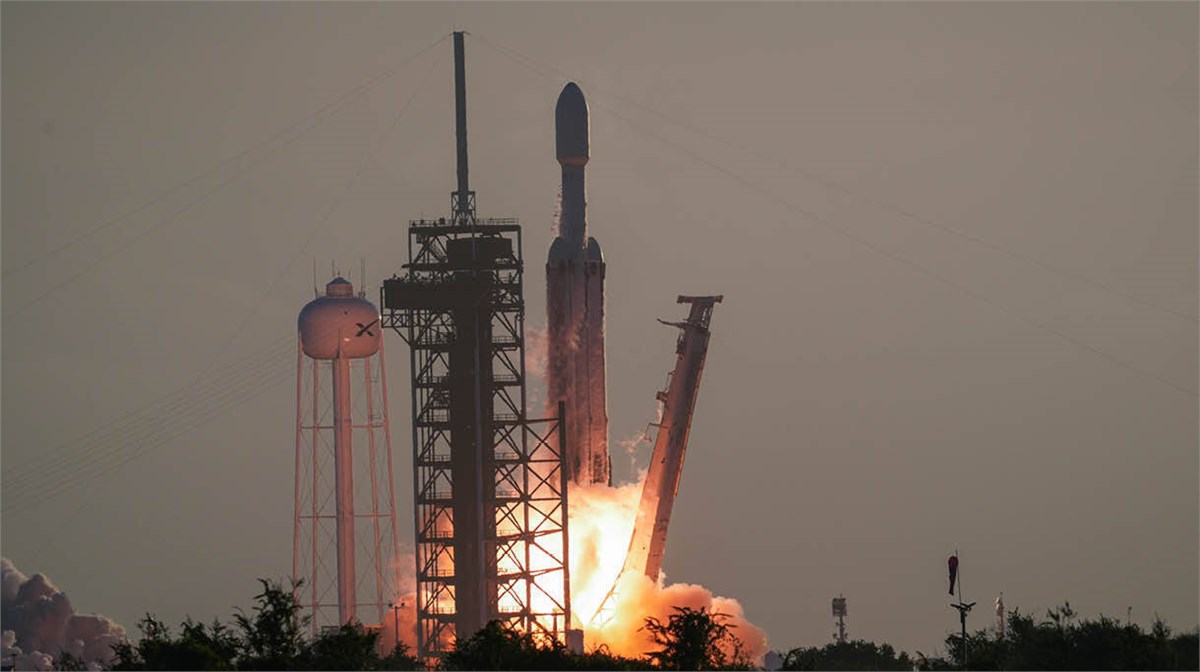
L3Harris Technologies has contributed key elements to NASA’s successfully launched Nancy Grace Roman Space Telescope, an observatory designed to map the universe. The milestone also marks the culmination of more than a decade of engineering, innovation, and collaboration between L3Harris and NASA’s Goddard Space Flight Center.
L3Harris provided the 2.4-metre Optical Telescope Assembly (OTA) for NASA, which serves as Roman’s eye. The company also supported the mission with radiation-hardened electronics, which keep the telescope in operation approximately 1 million miles from Earth.
Jeff Hanke, President of Space Systems, Space & Mission Systems at L3Harris, stated:
“It’s a great source of pride for L3Harris that the optical eye we engineered will survey the cosmos 1,000 times faster than the Hubble Space Telescope and is expected to unveil billions of galaxies, hundreds of millions of stars, and more than 100,000 distant worlds. This L3Harris technology is helping to rewrite our understanding of the universe.”
Roman’s L3Harris-built OTA will conduct three primary surveys once operational, including peering through the Milky Way’s dense galactic centre to build the largest astronomical catalogue ever compiled. It will scan roughly 12 percent of the entire sky in under 18 months to measure how quickly the universe is expanding and study supernova explosions from up to 8 billion years ago.
This milestone continues L3Harris’ tradition of enabling space exploration, as its technology was integral to landmark missions including the James Webb Space Telescope, Mars Perseverance and Curiosity rovers, the GPS satellite constellation, and International Space Station systems.
