

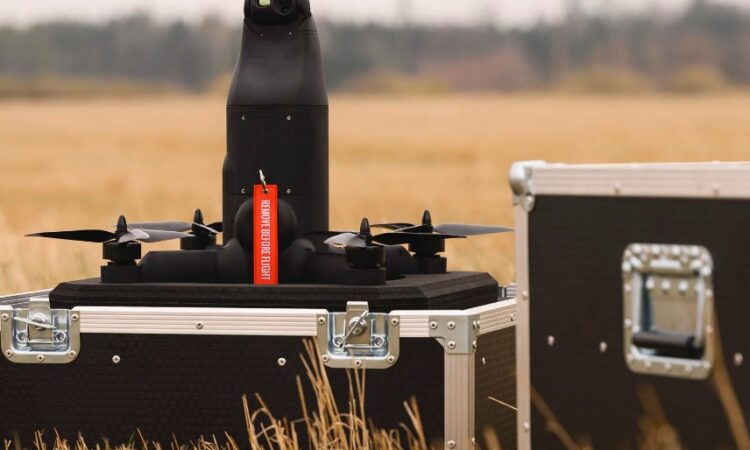
Origin Robotics has commenced deliveries of its BLAZE autonomous counter-UAS interceptor drones to the armed forces of Latvia, Belgium, and Estonia, marking a significant milestone in Europe’s accelerating push to strengthen airspace defence capabilities.
The contracts for the BLAZE systems were secured in late 2025, with Latvia among the first to confirm procurement, followed by Belgium and Estonia. Initial batches are now being delivered, with additional units scheduled as part of phased rollouts. The relatively rapid turnaround from contract award to delivery reflects growing urgency among European nations to field effective counter-drone technologies in response to rising security challenges.
BLAZE is designed as a fully autonomous interceptor drone capable of detecting, tracking, and neutralizing hostile unmanned aerial systems, including high-speed targets and loitering munitions. The platform integrates advanced sensors, AI-driven computer vision, and an onboard engagement mechanism to intercept aerial threats with precision. Engineered for operational flexibility, the system is compatible with NATO standards and can be integrated into layered air defence architectures.
Unlike traditional air defence systems that rely on fixed installations or high-cost missile interceptors, BLAZE offers a mobile and cost-effective solution for countering small, agile drones. Its autonomous operation allows rapid response times and reduced operator workload, particularly valuable when addressing multiple simultaneous threats.
National defence authorities in each country will conduct evaluation and integration activities as the systems enter service. In Latvia, testing will support deployment strategies and interoperability decisions. Belgium and Estonia are advancing integration efforts to align the capability with broader air defence networks. The rollout underscores a broader European trend of accelerating procurement cycles and greater investment in autonomous counter-UAS systems as drone threats evolve in complexity.
