

Northrop Grumman’s Pegasus rocket enables a rapid, flexible mission to boost NASA’s Neil Gehrels Swift Observatory, showcasing three decades of engineering innovation and advancing space science longevity and launch responsiveness.
Key Takeaways
- Pegasus’ unique, responsive air-launched design delivers critical, time-sensitive missions.
- Pegasus’ quick assembly and global launch flexibility exemplify Northrop Grumman’s capacity and speed in space missions.
This June, Northrop Grumman’s Pegasus rocket will launch a bold and time-critical mission to prevent NASA’s Neil Gehrels Swift Observatory from re-entering Earth’s atmosphere. Aboard the Pegasus rocket, Katalyst Space’s LINK spacecraft will race to intercept Swift in a decaying orbit and boost it to a higher altitude, extending the mission’s life. This daring, rapid response effort not only aims to save a scientific icon but also pave the way for future scientific advancements beyond Earth’s atmosphere.
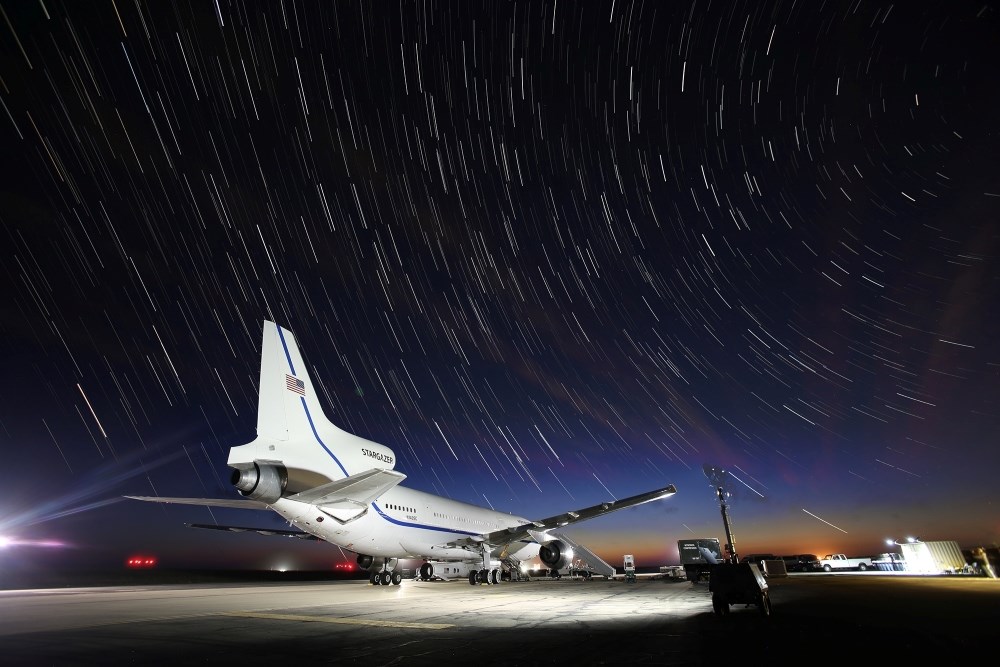
Swift’s orbital decay demands an urgent mission, launching before atmospheric drag makes recovery impossible. Pegasus is renowned for its pioneering air-launched design and was deemed the only system able to meet all orbit, timeline, and budget requirements. Released midair from an L-1011 carrier aircraft, the vehicle delivers payloads to low Earth orbit, offering flexibility and speed that many other rockets cannot match. It is one of the few viable rockets able to reach Swift’s in time.
With over 45 launches since 1990, Pegasus has been a decisive force in deploying cutting-edge scientific and exploration satellites. Its ability to be assembled, tested, and launched worldwide — including from Kwajalein Atoll for this mission to reach Swift’s unique low-inclination orbit — demonstrates unmatched adaptability.
Northrop Grumman’s history with Pegasus is one of deep technical stewardship. Steve Hollo, chief engineer of Pegasus, joined the program in 1998 and witnessed firsthand the evolution of the world’s first privately developed space launch vehicle.
“Pegasus has been instrumental in launching science satellites over the years, and doing this as a rapid response mission from Kwajalein Atoll truly highlights what Pegasus can do: quick assembly, testing, and global repositioning,” Steve said. “The latest mission features a complete avionics upgrade to modernize the rocket while carrying forward decades of technological heritage. Plus, not being tied to a single launch site gives us incredible flexibility and responsiveness that few other vehicles can match.”
While Pegasus sets the stage for the future of space launch, the boost of Swift remains a testament to Northrop Grumman’s engineering excellence and collaborative spirit. Swift was built at Northrop Grumman’s facility in Gilbert, Arizona, and launched in 2004 to study gamma-ray bursts — some of the brightest, most energetic explosions in the universe.
John Jordan, Swift’s original chief engineer recalls, “Swift was designed to observe gamma ray bursts that are so fleeting no previous telescope could catch them in the act. Swift detects gamma ray bursts over a large part of the sky, and then rapidly (swiftly) re-orients to point powerful X-ray and ultraviolet telescopes to observe the fading afterglow of the explosions.” The mission has detected over 1,700 bursts to date and has helped scientists discover that one class of gamma ray bursts is caused by merging neutron stars forming black holes.
Swift’s success is rooted in smart design, robust engineering and close ties with the scientific community. Originally intended for a two-year mission, Swift has remained operational for over two decades. Since then, Northrop Grumman has continued to support on-orbit sustainment of Swift.
“Its longevity isn’t luck. It’s the result of solid engineering, in-house built redundant avionics and continuous learning from extensive ground testing and real-time operations,” said John. “Working on Swift was a memorable experience: a small, dedicated team working directly with scientists to deliver precisely what NASA needed, and that hands-on approach still shapes how we design missions today.”
Looking ahead, the combined legacy of missions like Swift and Pegasus equip Northrop Grumman to lead new frontiers in space exploration and launch. Emerging initiatives draw inspiration from the long-term success of these missions to develop rapid response satellite constellations, deep-space observatories, and more. The upcoming Pegasus launch is more than a mission — it is the continuation of a remarkable journey and a deep engineering legacy that will continue to provide critical scientific advancements beyond the earth’s atmosphere.
