

Leaf Space, a global leader in Ground Segment-as-a-Service, has announced the launch of TreeNet, a breakthrough technology designed to transform satellite clusters into shared orbital mesh networks. TreeNet marks a fundamental shift in space communications: moving from intermittent, schedule-dependent links to a resilient, “always-on” network architecture that eliminates the connectivity bottlenecks of modern constellations.
Rooted in terrestrial connectivity principles, the launch of TreeNet represents a strategic leap for Leaf Space, bridging the gap between orbital operations and the seamless connectivity standards of Earth-based infrastructure. Beyond extending ground access, TreeNet enables direct satellite-to-satellite communication. Satellites within a TreeNet-connected cluster can exchange data with each other in orbit, independently of any ground link, opening new possibilities for autonomous constellation operations, coordinated maneuvers, and distributed mission architectures.
The result is a fundamental shift in how connectivity works: from a one-to-one, pass-dependent model to a network-level capability that makes ground access dramatically more available and simpler to operate. Inter-satellite communication occurs at near-zero latency — a critical advantage for time-sensitive missions such as disaster response, space traffic management, and constellation coordination.
TreeNet is designed to complement existing infrastructure, being fully compatible with Leaf Space’s Leaf Line ground network and working alongside whatever communication systems operators already use. Integration is incremental — a plug-and-play addition to an existing ecosystem.
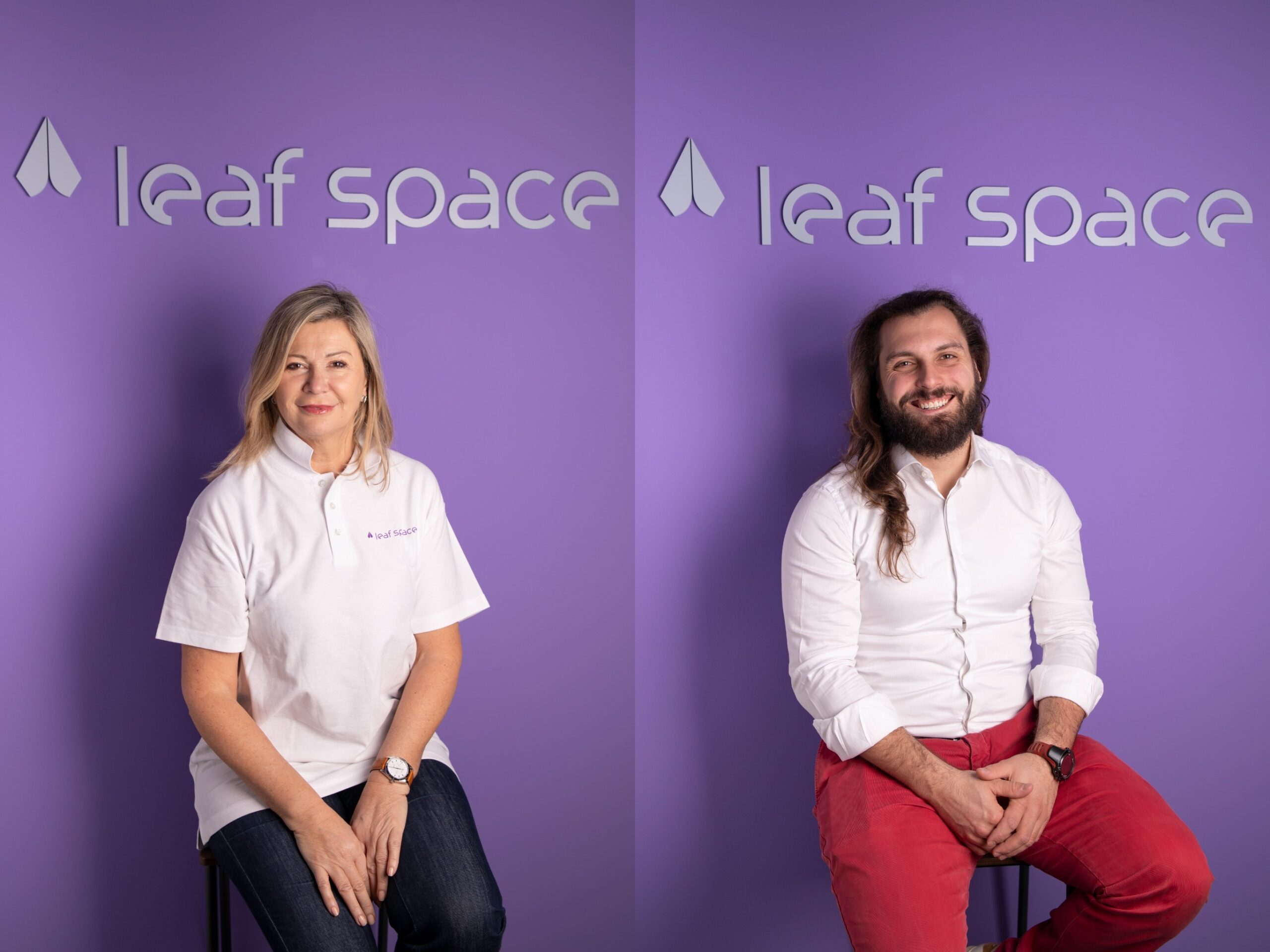
Cristina Zanchi, CEO of Leaf Space, stated:
“The space industry is entering a phase where performance, speed, and flexibility define success. Connectivity is no longer just an operational necessity; it is the foundation of how space will scale. With TreeNet, we are turning connectivity from a bottleneck into an enabler, allowing operators to move faster, think bigger, and design missions without being constrained by access to the ground. This launch reinforces Leaf Space’s long-term commitment to building the infrastructure that allows space to truly function as a network.”
Giovanni Pandolfi Bortoletto, Chief Product Officer & Co-Founder, added:
“TreeNet is the natural next chapter in our vision of ‘Space Connected, Limits Gone.’ We built the ground infrastructure that gave satellite operators reliable, scalable access to Earth. Now we are extending that principle into orbit itself. With TreeNet, connectivity is no longer something a satellite waits for — it is something the network provides. This is a fundamentally different way of thinking about space communications, and we believe it will change how missions are designed, operated, and scaled.”
As satellite operators navigate an increasingly competitive market, access to continuous, reliable connectivity is a fundamental requirement. TreeNet addresses a real operational constraint. By being part of the early access program, operators can help shape the forefront of how space communications will evolve. TreeNet is one of the final steps toward what Leaf Space calls the “Internet for Space”: a distributed network exchanging data across orbits, continuously and autonomously. The ground segment remains essential, but its role evolves from the sole point of access to one trusted node within a broader network.
TreeNet is now available for early access. Satellite operators interested in being among the first to integrate and deploy TreeNet are invited to get in touch directly. Leaf Space’s team will work closely with early adopters to support integration and help shape the product as it evolves toward full market availability. Early access operators include D-Orbit and other partners announced at launch.