

This week will be remembered.
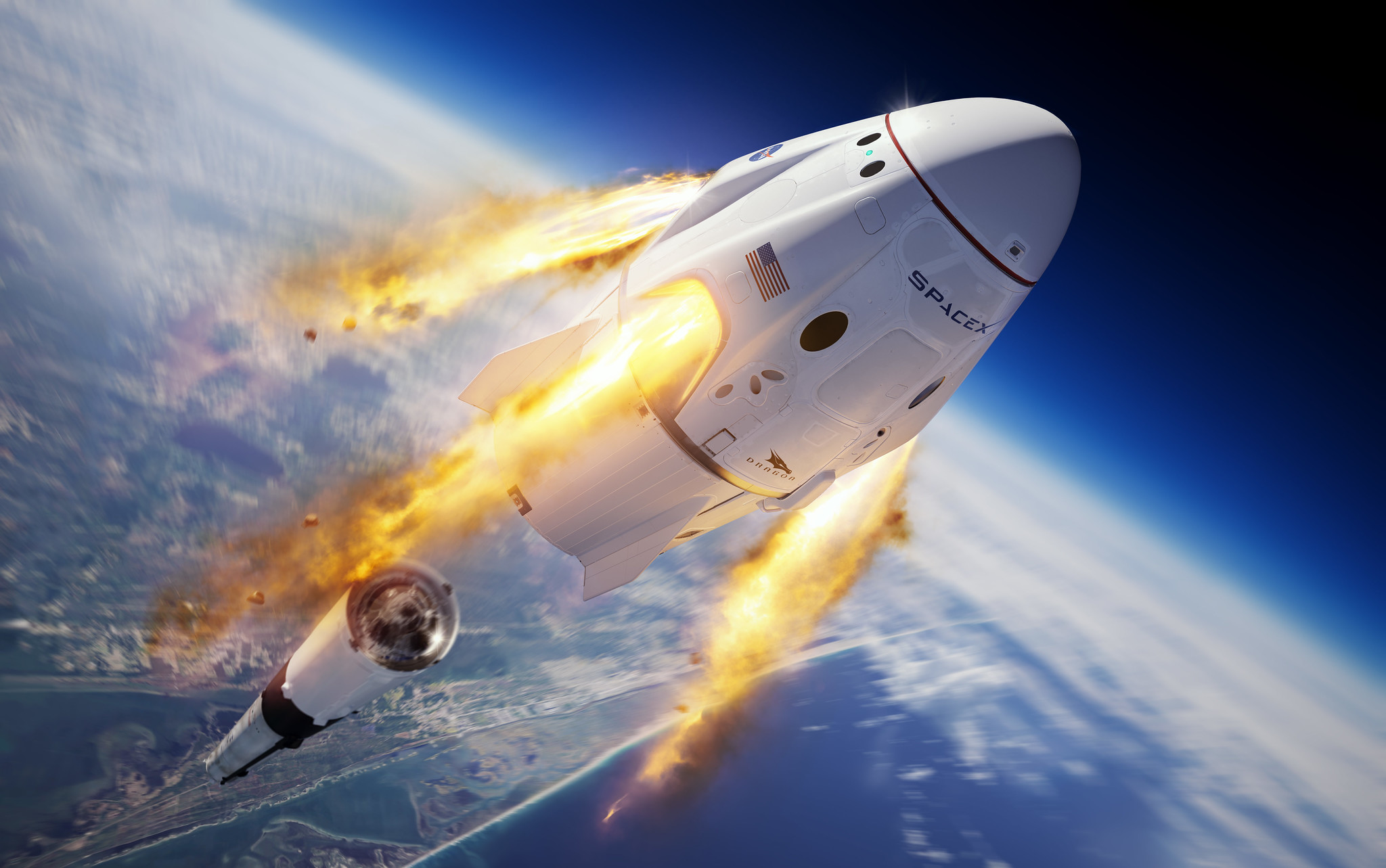
On 9 June 2026, two European space companies raised a combined €720 million in a single morning. Finland’s ICEYE closed a funding round exceeding €1 billion, one of the largest private financings in European defence and space history, with a primary Series F of €450 million at a €10 billion valuation. Hours later, Germany’s Isar Aerospace announced a €270 million Series D to scale production of its Spectrum rocket and expand launch operations from Norway to Canada. And on 12 June, SpaceX goes public on the Nasdaq at $135 per share, targeting a valuation of $1.77 trillion, which would make it the most valuable company ever to list on a public exchange.
In a single week, the space sector has done something it has been trying to do for decades: it has made even the sceptics pay attention.
But the real story here is not about rockets, radar satellites, or record-breaking IPOs. It is about something more consequential. It is about who will own, finance, and control the infrastructure upon which the twenty-first century depends.
The Numbers That Change the Conversation
The global space economy was valued at $626 billion in 2025, roughly double its size a decade ago. It is projected to cross $1 trillion before 2035. Launch costs, once the industry’s most punishing barrier, have been compressed from tens of thousands of dollars per kilogram to potentially under $100 per kilogram with Starship. SpaceX alone controls more than 80% of US rocket launches and now has 12 million Starlink subscribers across 160 countries.
These are not speculative figures. They are the foundation of a structural shift that is attracting the kind of institutional capital that previously stayed well away.
SpaceX reported $18.7 billion in revenue for 2025, a 33% year-on-year increase. Its IPO could raise to $75 billion, surpassing Saudi Aramco’s $29 billion listing in 2019 as the largest public offering in history. Nasdaq has already adjusted its index rules to accelerate SpaceX’s entry into the Nasdaq-100.
For entrepreneurs and investors in the space sector, this is not just a headline. It is a proof of concept.
What SpaceX Actually Proved
Much has been written about Elon Musk. Too much, arguably.
The more important lesson of SpaceX is financial, not biographical. Before SpaceX, the prevailing assumption was that private companies could participate in the space economy but could never truly define it. Governments would remain the primary customers, financiers, and decision-makers.
SpaceX dismantled that assumption, not through inspiration alone, but through relentless unit economics. It demonstrated that launch costs could fall by an order of magnitude, that recurring commercial revenue was achievable, and that a space company could reach scale without depending entirely on government budgets.
This altered the psychology of capital markets. Space stopped being viewed as an engineering challenge wrapped in national pride. It became a business opportunity.
The lesson for founders is not to copy SpaceX. The world does not need another SpaceX. Europe does not need another SpaceX. The lesson is more fundamental: investors reward companies that solve identifiable problems and build sustainable revenue streams. The technology matters, but the business model is what unlocks capital at scale.
Europe’s Defining Week
The ICEYE and Isar Aerospace announcements are not isolated events. They are signals of a broader and increasingly urgent shift.
ICEYE has built the world’s largest commercial synthetic aperture radar satellite constellation, giving governments and commercial customers the ability to monitor events on Earth regardless of weather or time of day. Its valuation leapt from $2.4 billion in December 2025 to over $10 billion today, driven not by hype but by intensifying demand for sovereign intelligence from space. Defence applications now dominate its commercial direction. Governments use its data for border monitoring, battlefield awareness, and maritime surveillance. The company projects annual revenue above €500 million as its constellation scales.
Isar Aerospace tells the urgency of the underlying problem even more starkly. Europe conducted fewer than 10 orbital launches in 2025. The United States conducted more than 190. China conducted 90. Europe’s share of global launch activity is approaching the irrelevant. SPARTA 2.0, NATO’s strategic assessment published in May 2026, names sovereign European access to space as a central capability gap on the path to autonomous defence. Isar’s own demand has shifted dramatically in response: within the past twelve months, its customer base moved from almost entirely civil to 60% defence.
These are not companies selling dreams. They are companies filling capability gaps that governments consider existential.
The Bubble Question, Answered Honestly
Every period of rapid investment attracts scepticism, and the space sector deserves its share.
The concerns are legitimate. Space remains one of the most capital-intensive industries on earth. Development timelines routinely stretch beyond projections. Technical failures destroy years of work in seconds. Isar’s first Spectrum launch in March 2025 lasted less than 30 seconds before the rocket lost control. SpaceX itself posted a $4.9 billion net loss in 2025, reversing $791 million in profit the prior year, partly due to the integration of xAI. At a price-to-sales ratio of nearly 95 times annual revenue, its IPO valuation demands a level of faith that not everyone is prepared to extend. There is also a structural challenge that does not get discussed enough: space revenues are inherently lumpy. A single launch failure can erase a quarter. A delayed contract can distort an entire financial year. This is part of why SpaceX stayed private for over two decades, and it is a reality that public market investors, accustomed to predictable SaaS-style revenue curves, will need to relearn how to price.
History counsels caution. The first satellite broadband wave of the late 1990s, Teledesic, ICO Global, Iridium, consumed billions in capital and ended in bankruptcy. The promise was real. The timing and unit economics were not. Some of the capital flowing into the sector today is chasing narratives rather than revenues. Some valuations reflect strategic hope more than commercial traction. Morningstar has already called SpaceX’s IPO price “significantly overvalued.” Consolidation is coming, and it will be painful for investors who did not ask hard enough questions.
So the honest answer to the bubble question is: partially, yes.
But a bubble and a structural shift are not mutually exclusive. The dot-com crash wiped out hundreds of companies and enormous wealth, and it also preceded two decades of internet-driven economic transformation. What matters is whether the underlying thesis holds.
On that, the evidence is increasingly difficult to dismiss. Governments are not signing long-term contracts for satellite communications and Earth observation because they have been swept up in enthusiasm. Militaries are not restructuring doctrine around space assets because of a speculative narrative. The SPARTA 2.0 report, French defence spending of €4.2 billion on military space for 2026 to 2030, Germany’s first-ever Ministry of Defence contribution to ESA: none of this is driven by sentiment. It is driven by structural need.
The bubble risk is real. So is the opportunity. Conflating the two is the most expensive mistake a serious investor can make.
Sovereignty Is Now an Investment Thesis
Perhaps the most important change in the investment landscape has nothing to do with technology and everything to do with geopolitics.
The conflict in Ukraine transformed how European governments think about space. Satellite communications, earth observation, navigation systems, and space-based intelligence are no longer optional capabilities. They are increasingly regarded as prerequisites for national security and economic resilience.
This has created a new and powerful investment theme: sovereignty.
Investors traditionally evaluated companies on their capacity to generate financial returns. Today, they are also evaluating how companies contribute to strategic autonomy, national resilience, and economic security. The two objectives, once treated as entirely separate, are converging.
European institutions are writing cheques that reflect this shift. At ESA’s ministerial conference in late 2025, 24 of 27 contributing nations increased their commitments. Germany pledged over €5 billion. France announced €4.2 billion in additional military space spending. Spain tripled its average annual contribution. European space ventures secured a record €1.5 billion in venture capital in 2024, a 56% increase over 2023. This week’s ICEYE and Isar rounds alone, totalling €720 million excluding secondary placements, already represent roughly half of the entire 2025 European space VC total. 2026 is on course to break records.
Strategic autonomy is no longer a slogan debated in Brussels conference rooms. It is an allocation decision.
The Structural Gap Europe Cannot Ignore
Optimism about European space capital must be tempered by an honest accounting of what still needs to change.
Average European space deal sizes remain roughly half of their US equivalents. Deal count in Europe fell 15% in 2024, even as total funding grew, meaning capital is concentrating rather than broadening. Two-thirds of European space investment flows to companies in France, Germany, and the United Kingdom. The ecosystem remains shallow outside those three markets.
But the deeper problem is not early-stage funding. It is what comes after. Europe lacks the growth capital and late-stage investment infrastructure that takes a promising space company from Series C to exit. The listing venues exist. Frankfurt is a credible exchange, fully capable of handling major IPOs. What is thin is the pool of European institutional investors willing to back a space company through the messy middle years, when revenues are growing but lumpy, and the path to profitability requires patience that most growth funds do not have. The last VC-backed technology company to list in Germany was Zalando. Before that, SAP. That is a long gap, and it reflects a structural absence of late-stage capital formation that the space sector will eventually run into.
Scaling a European space company is therefore no longer only a technology or funding question. It is increasingly a capital markets readiness question. And that readiness, whether the end goal is a public listing or an acquisition, demands the same discipline: sustainable revenue, a credible CFO, and exit-readiness built long before the exit arrives.
M&A is an underappreciated path here. The conversation about European space exits has focused almost exclusively on IPOs, but strategic acquirers are circling the sector, and not always from within it. Some of the most interested buyers are technology and data companies that see space-derived intelligence as the next layer of their AI and analytics stack. For them, the attraction is not rockets or satellites. It is the data those assets generate and the edge that data creates when fed into the right models. This changes who European space companies should be talking to, and how they should be positioning themselves for exit.
More fundamentally, without independent, reliable, and affordable access to orbit, no European satellite constellation, earth observation network, or secure communications system is truly European. Launch is the sovereignty bottleneck. It is the capability that cannot be borrowed, contracted out, or purchased from a geopolitical competitor when the moment of crisis arrives.
That is the context in which Isar Aerospace’s €270 million round must be understood. It is not just a funding event. It is Europe making a bet on whether it can close a gap that has been widening for years. The qualification flight for Spectrum is imminent. The stakes are significant.
What Comes After SpaceX
The IPO on 12 June is a milestone, but the more interesting question is what it signals for everyone else.
A successful SpaceX listing at anything approaching its targeted valuation will have a powerful downstream effect on capital markets. It will validate the infrastructure thesis. It will draw in institutional investors who have been watching from the sidelines. It will open the door for companies like ICEYE, which has long discussed a potential IPO, to consider public listings at a scale previously unimaginable for a European space company.
But the next generation of space champions may not build rockets at all. The $626 billion global space economy is not a launch economy. Launch is the enabler. The value is in what launch makes possible: the data, the connectivity, the intelligence, the analytics, the climate monitoring, the positioning services, the logistics infrastructure. Satellite communications accounted for 38% of the space economy in 2025. Earth observation is growing at double-digit rates. The intersection of space-derived data with artificial intelligence is producing new business categories that simply did not exist five years ago.
The winners of the next decade will not necessarily be those who travel furthest from Earth. They will be those who extract the greatest value from the infrastructure that now surrounds it.
Why This Week Matters
The significance of this week is not the size of any individual funding round or the drama of any particular listing.
The deeper story is that space has completed a transition that has been underway for more than a decade. It has moved from a sector that inspired investment to a sector that demands it. The global economy is now structurally dependent on orbital infrastructure in ways that felt theoretical a generation ago. GPS underpins $1.4 trillion in annual economic activity in the United States alone. Satellite communications support supply chains, financial networks, agricultural systems, and military operations all at once. Earth observation is becoming the real-time nervous system of climate response and national security alike.
Investors have finally understood what military planners understood years ago: that whoever controls space infrastructure holds a decisive advantage over those who do not.
For those building companies in this sector, and for those funding them, this week is more than inspiring. It is clarifying. The capital is real. The demand is real. The strategic stakes are real.
The question now is not whether space matters to the global economy. That question has been answered.
The question is whether Europe, and the entrepreneurs building within it, are moving fast enough to shape what comes next, or whether they will spend another decade watching others define the infrastructure of the century on their behalf.
That gap is still closeable. But the window is not open indefinitely.