

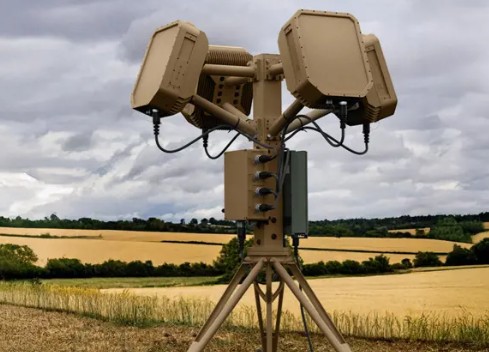
EchoDyne has announced plans to build a new manufacturing plant dedicated to producing large volumes of its counter-UAS radar systems, with an annual output expected to reach 30,000 units. The initiative aims to scale production to meet rapidly growing global demand for affordable, high-performance radar sensors used in detecting and tracking small unmanned aerial systems.
The expanded facility will significantly boost capacity for EchoDyne’s proprietary radars, which are designed to provide reliable detection of small, low, slow, and hard-to-detect drones—a class of threats that traditional air defence radars often struggle to spot. These specialized sensors are widely used as a core component of layered counter-UAS architectures, feeding accurate airspace data to command-and-control systems and other mitigation technologies.
EchoDyne’s leadership has highlighted the importance of scalable domestic production amid rapidly evolving threat environments. With small unmanned systems increasingly employed for reconnaissance, disruption, and weaponized missions worldwide, governments and private security customers are investing in radar-centric detection capabilities.
The new plant is expected to house advanced automated production lines, quality assurance labs, and assembly cells capable of streamlining high-volume manufacturing while maintaining performance standards. By localizing production and leveraging automated processes, EchoDyne aims to reduce costs, improve supply chain resilience, and accelerate delivery timelines. EchoDyne radars are compact and modular, designed for easy installation on fixed, mobile, or expeditionary platforms. They use digital signal processing and modern antenna architectures to reliably detect low-observable UAVs at meaningful ranges.
Industry analysts note that the counter-UAS radar segment has seen explosive interest as nations prioritize airspace sovereignty. EchoDyne’s production expansion positions the company as a major supplier capable of meeting both domestic and international orders without long lead times. The manufacturing project will also support workforce growth, creating new jobs in engineering, production, and quality control. By scaling up to tens of thousands of units per year, EchoDyne aims to strengthen layered defences against the increasing prevalence of unmanned aerial threats.
